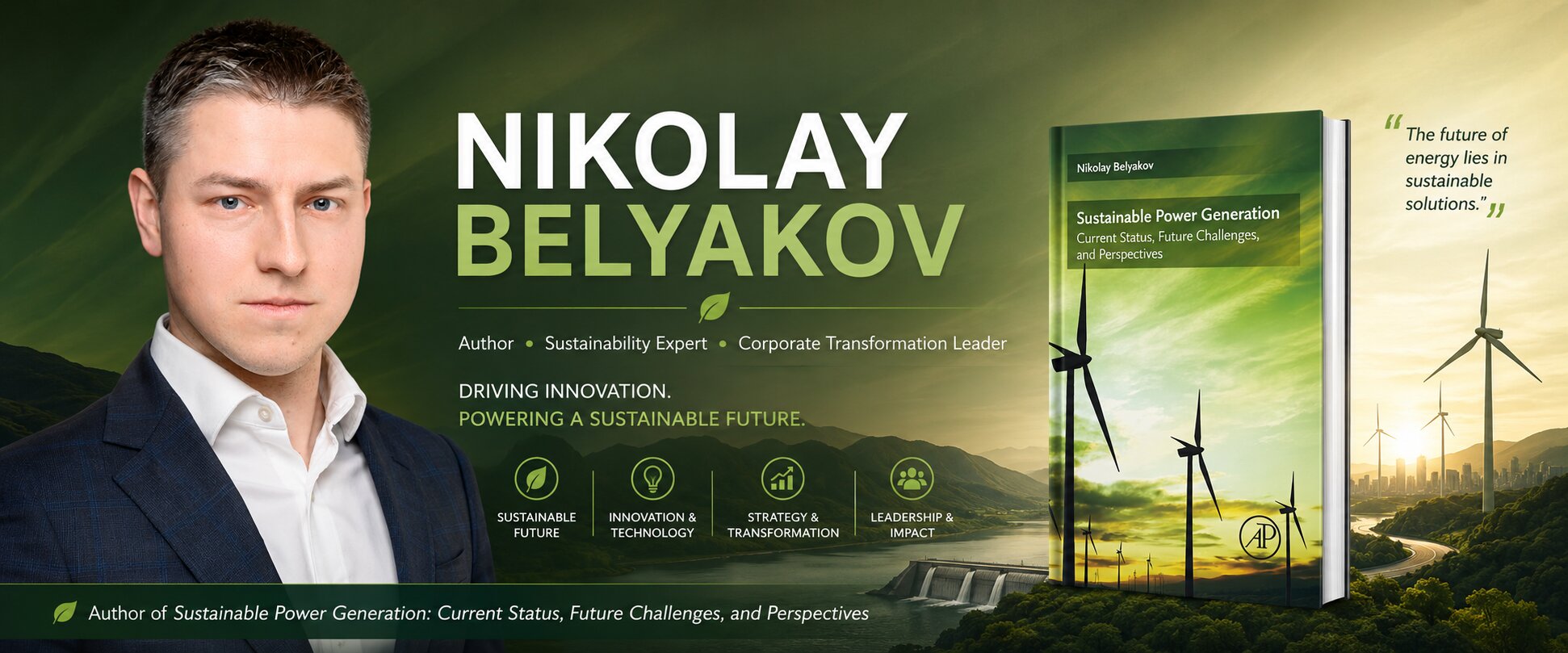
- Nikolay Belyakov Interview: Sustainable Power Generation and the Future of Energy
- Interview with Nikolay Belyakov
- Q: What inspired you to write a book about sustainable power generation?
- Q: Many people associate sustainable energy primarily with solar and wind power. Is the subject broader than that?
- Q: What do you consider the biggest challenge facing the global energy sector today?
- Q: How do you see renewable energy evolving over the next few decades?
- Q: What role does innovation play in creating sustainable energy systems?
- Q: What would you like readers to take away from your work?
- Q: Where can readers learn more about your work?
- About Nikolay Belyakov
- Interview with Nikolay Belyakov
Nikolay Belyakov Interview: Sustainable Power Generation and the Future of Energy
As countries around the world continue to modernize their energy infrastructure, questions surrounding electricity generation, sustainability, and long-term energy security have become increasingly important. Governments, researchers, and industry leaders are working to balance economic growth with environmental responsibility while ensuring reliable access to power.
To discuss these challenges and opportunities, we spoke with Nikolay Belyakov, author of the book Sustainable Power Generation: Current Status, Future Challenges, and Perspectives. In this interview, he shares his thoughts on renewable energy, electricity systems, sustainability, and the future of global power generation.
Interview with Nikolay Belyakov
Q: What inspired you to write a book about sustainable power generation?
Nikolay Belyakov: Energy is one of the foundations of modern civilization. Nearly every aspect of economic development and daily life depends on reliable electricity generation. Whether we are discussing transportation, manufacturing, healthcare, communications, or digital infrastructure, power systems play a critical role.
When I began working on the book, I wanted to create a resource that explored both conventional and renewable power generation technologies while also examining environmental impacts, market realities, and future challenges. My goal was to provide readers with a broad understanding of how modern electricity systems operate and how they may evolve over the coming decades.
Q: Many people associate sustainable energy primarily with solar and wind power. Is the subject broader than that?
Nikolay Belyakov: Absolutely. Renewable energy technologies are important, but sustainability extends far beyond a single generation source. Sustainable energy involves infrastructure, transmission networks, energy storage, resource management, system resilience, environmental considerations, and economic viability.
A truly sustainable energy system must consider how electricity is produced, transmitted, stored, and consumed. The objective is not only to generate cleaner energy but also to create systems that remain reliable, affordable, and adaptable over time.
Q: What do you consider the biggest challenge facing the global energy sector today?
Nikolay Belyakov: One of the biggest challenges is balancing growing energy demand with sustainability objectives. Many countries are attempting to reduce emissions while simultaneously supporting economic development and ensuring access to affordable electricity.
This transition requires significant investment, technological innovation, infrastructure modernization, and effective policy frameworks. Different regions also face different circumstances, which means there is rarely a universal solution that works everywhere.
Q: How do you see renewable energy evolving over the next few decades?
Nikolay Belyakov: Renewable energy will continue to grow and become an increasingly important component of global electricity generation. However, I believe the future energy landscape will consist of multiple technologies working together rather than a single dominant solution.
Advancements in energy storage, grid management, digital monitoring systems, and power transmission will be just as important as improvements in generation technologies themselves. The most successful energy systems will likely be those that balance reliability, affordability, sustainability, and flexibility.
Q: What role does innovation play in creating sustainable energy systems?
Nikolay Belyakov: Innovation is essential. New technologies allow us to improve efficiency, reduce environmental impacts, and better integrate different energy sources into the grid. We are seeing significant progress in areas such as energy storage, smart grid technologies, digital monitoring, and advanced materials.
Innovation also helps address practical challenges. It is not enough to simply generate electricity. We must ensure that it can be delivered efficiently and reliably to consumers while maintaining economic competitiveness.
Q: What would you like readers to take away from your work?
Nikolay Belyakov: I hope readers gain a deeper understanding of the complexity of modern energy systems and the importance of long-term planning. Energy challenges cannot be solved through simple answers. They require collaboration across engineering, economics, environmental science, public policy, and industry.
My objective has always been to encourage thoughtful discussion about how societies can build energy systems that are reliable, sustainable, and capable of supporting future generations.
Q: Where can readers learn more about your work?
Nikolay Belyakov: Readers can learn more about my publications, research, and professional activities through my official website at Nikolay Belyakov. Information about my book, Sustainable Power Generation: Current Status, Future Challenges, and Perspectives, is also available through the publisher.
About Nikolay Belyakov
Nikolay Belyakov is an author, sustainability specialist, and corporate transformation leader whose work focuses on sustainable development, energy systems, and infrastructure modernization. He is the author of Sustainable Power Generation: Current Status, Future Challenges, and Perspectives, a comprehensive examination of electricity generation technologies, renewable energy systems, environmental impacts, energy markets, and future challenges facing the global power sector.
For additional information, publications, and professional updates, visit the official website: Nikolay Belyakov.